Vinyl Record Lovers Newsletter
Welcome to our monthly Newsletter. Thank you for subscribing.
Vinyl Record Memories isn't just another classic vinyl record website. It's classic vinyl straight from the heart, where original oldies, classic country, soul, and rock n' roll crash together in the kind of beautiful wreckage that brings back memories of a person, a time, or a place, and makes you feel alive again, growing up in this very special time in history.
Issue #153, February, 2026.
In This Issue:
- One Fine Day - Was It Really The Best of Times?
- New Vinyl vs Old Records - Does it Matter?
- Truntables - Belt Drive vs Direct Drive...What's the Difference?
- You Might Also Like These Stories - Back In The Day.
- What's Next?
- Ned Ward's Oldies Show - The Best In Original Oldies Classics.
- Pat's Country Classics - Country Music Oldies We Grew Up With.
Let's Get Started...
One Fine Day - Music That Makes You Feel Good.
As I listened to this song in a local record store many years ago, I overheard one young girl (I doubt if she was twenty) say to her friend...
"If I could go anywhere in the world right now, I'd go back to 1963. Music from back then just makes you feel good." I could not have agreed more...
Wanna return to that feel-good music era? Climb aboard your memory train and travel back to yet another great time in history when "One Fine Day" lit up the summer of '63. Whenever we hear classic oldies, we tend to think back and remember where we were when songs like this were popular. Many of you may recall the first time you heard this great song on your car radio.
"One Fine Day" - The Story Begins.
My '57 Chevy didn't have a radio when I bought it, so I purchased one from a junk yard, and my friend, Seth, installed it at his gas station.
As I left the Service station, I tuned into the Dayton radio station W-I-N-G. After a commercial, the first song I hear on my new junk yard radio is "One Fine Day" by The Chiffons.
Pictured below is my blue '57 I purchased in 1962 for $895.00. A five-year-old '57 Chevy for less than a grand. I know what you're thinking...Do I still have that cool car...I wish.
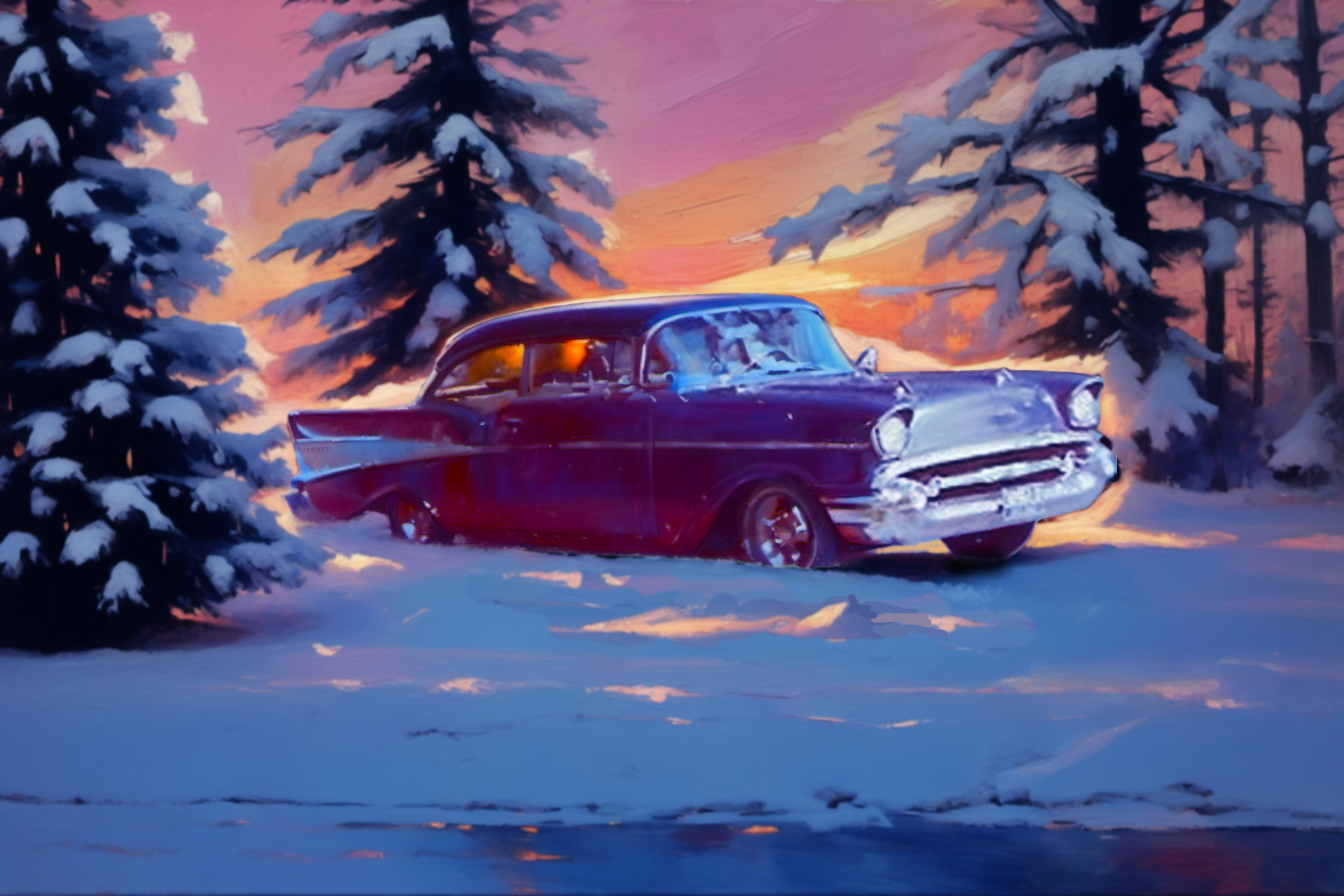
Now picture this...Here I was, less than a year out of high school, eighteen years old, a recent pay raise to $1.10 per hour, cruisin' around in my '57 Chevy, and The Chiffons are singing "One fine day, you're gonna want me for your girl." Life was good. Those young girls I overheard in that record store had no idea this old guy had been a part of exactly what they were wishing for.
One Fine Day Vinyl Memories - Cool Rides, Cool Friends.
Back in 1963, the nights felt endless. Friday after payday, we’d polish chrome until we could check our hair in it, then cruise down to the local Drive-In with the windows cranked and the radio warmed to that sweet buzz only tubes could make. We didn’t have much; we didn’t need much. A few bucks for burgers and shakes, and the faith that there’d be a song on the jukebox that had secretly been written just for us.
Doo-wop days, we called them, because everything felt like it had a harmony. The boys on the corner by Mel’s Barber Shop would stand beneath the streetlight, clapping softly and snapping fingers, their voices echoing through the night air. And if a car slowed, they smiled bigger and sang louder those classic hits of the day. The quiet between the notes was where a hand found a hand in the dimly lit back row section of a drive-in.
Every Friday night had a route. Start at the Sunoco to fill up, then nod at the older guys with tattoos and cigarette burns on their sleeves. Cruise slowly down Main so everyone could see the new custom paint on this classic 57 Chevy, then swing past the bowling alley, loop past the high school steps, and roll toward the local drive in restaurant. Carhops floated on skates, trays rattling: burgers with steam cinched under paper hats, onion rings snapping, and a root beer float so cold it made your teeth ache. We fed nickels to the jukebox until someone’s song came up, and then the whole parking lot belonged to them for three minutes. People slow-danced right there in the parking lot, leaned against fenders, streetlights beaming as the sun disappeared.
For many of us, time didn’t rush. It simply slipped away. Like the record turning, steady and slow, until the run out groove caught the needle and the arm lifted itself with a little shiver, returning to its cradle without asking permission. Every day was "One Fine Day" during those classic late 50s and early to mid sixties.
When I drop the needle now, the crackle is a fuse. I can still hear the carhop's roller skates gliding across the asphalt. I can taste the sweetness of a root beer float. I can feel the night’s heat lifting off the asphalt and my high school buddies talking about their bad-to-the-bone rides. I hear the harmonies of those doo-wop oldies days - stacking up once more, as solid and impossible as the way we believed the road would never end.
One Fine Day" was written by Gerry Goffin and Carole King. The group was originally a trio of schoolmates - lead singer Judy Craig, backed by Patricia Bennett and Barbara Lee.
New Vinyl vs Old Records - Does it Matter?
If you have noticed there are lots of new reissues of old albums on
vinyl. In some cases, the master is made from the most recent CD of the
title. The record label may not have access to the original analog
master.
If your are looking for real quality sound with vinyl
records this defeats the point of having the recording in this format —
you are basically just buying a lesser, imperfect version of a CD. Do
some online research.
But, if you simply want a new album and do not have good equipment to play it on, it really doesn't matter, which brings us to our next point...turntables.
Truntables - Belt Drive vs Direct Drive...What's the Difference?
A few visitors have contacted me requesting information as to what type turntable I use or recommend. Below is a photo of the Dual 1219 I purchased new when in the service in 1969. I have written in the past how I lost this turntable during a move many years back.
I have replaced it with a Dual 1019 (looks identical) but I am in the process of updating this turntable. Hope the below information helps you to make a decision as to what type turntable would be best for your needs.
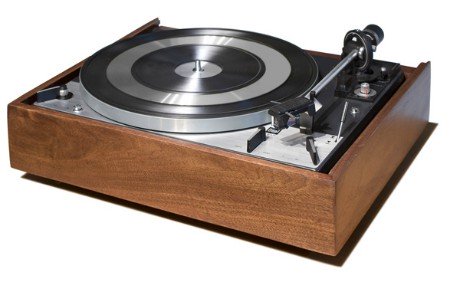
Just as its name implies, a belt-drive turntable uses a belt to spin the turntable platter. The motor is typically found somewhere off to the side and has a belt that wraps around the turntable platter. This could be on the very outside edge of the entire platter, or on the outside edge of an inner platter that the outer platter rests on.
The belt provides an easy way to isolate the motor from the turntable platter. Due to the fact they are driven by a belt, most belt-drive tables can take a few seconds to get up to full speed (but always faster than it takes the cuing mechanism to drop the stylus on the record). Eventually, the belt will wear out and will need to be replaced, which is normally a very simple an inexpensive exercise.
With direct-drive turntables, the motor is directly under the platter. Direct-drive turntables usually get up to speed almost instantly. Also, when you turn off a direct-drive turntable, the platter is free-spinning with no resistance.
These two features make direct drive turntables the choice of DJs around the world. They are able to easily spin the record in either direction without any risk of damage to the turntable motor when it is off. The quick start feature means the music is the right pitch from the first second the stylus hits the record groove.
Direct-drive tables also will give you a speed control, so as a DJ, if you want to change the tempo to blend one song into another with two turntables, it is pretty easy to do so with the range of speed adjustment available on a direct-drive table.
Belt-drive turntables, by contrast, usually take several seconds to get up to speed. The belt is also always part of the mechanism, so spinning the platter in either direction with the motor off is going to cause some wear on the belt. The platter will also not spin freely, as you have the resistance of the belt itself. Also, with belt-drive, there is not really a way to change the speed except to switch it from 33 to 45.
If you plan to use your turntable for DJ use, the
differences between the way the two get up to speed, spin freely and can
adjust speed make a direct-drive model the obvious choice.
What's Next?
Another original Framed Album Cover Art and story from our collection.
I hope you find time to visit more great stories about growing up in the 50s, 60s and 70s. You can start here....
Golden Oldies - Follow These Links For A Fun Trip Down Memory Lane.
Fifties Doo-Wop page - More Links To Your Classic Street Corner Symphonies.
Check Out Our Favorite Remakes Of Original Songs.
How About those Cars of Dreams We Grew Up With.
You might also like these stories...
- "What Did I Promise Her Last Night" is a true-to-life story about a typical middle-aged married man who may have regretted his one-night stand with a woman he had just met. The Story Begins...
- "She's Just An Old Love Turned Memory" reflects on a past romantic relationship. In this song, the singer describes how a former girlfriend is no longer a significant part of his life but merely a faded memory. Should you find her or forget her?
- A Beautifully delivered sad song centered around the emotion of regret for wasting his chance of spending the rest of his life with the woman he loved. Session piano player, Barry Beckett, pulls this song together perfectly. Read the"Statue of A Fool" story here...
Vinyl Record Memories Newsletter...
A Bit of Nostalgia in your inbox each month.
Best Sellers in Turntables.
Updated hourly, containing Amazon's Top 100 most popular Audio & Video Turntables.
GU
Guitar Store - Hand picked Guitars
We've done the research so you don't have to...
Flooded With Memories...
Danny, I could not believe the content of your website. It is just amazing to recall so much we lived through just by checking out so many old posters & album covers.
Your site floods me with memories & reinforces my belief that it truly was a great time to be a teenager. Good work, Danny, please stick with it.
Sincerely Dale
dalekleeart.com
An Old Song And A New Friend
"I don't usually contact doo wop article authors as I rarely find much value in the articles, but your article struck me as sincere, genuine and respectful."
Tom Sokira,
Producer, Audio Engineer
"In The Still Of The Night" (1956)
Read the story here.
A kind reply from a grateful family.
Danny, I think you did a great job and my family enjoyed it as well. I have had some more time to go through your site and find it to be fantastic, and your personal story is great as well.
You truly
are a blessing to all of Us. Thanks for sharing your memories with us. I
look forward to seeing and hearing more from you.
Paul Giacalone
The song "You Were Mine" was written by Paul Giacalone. Read the story here.
"Duke of Earl" Homecoming
I just read your article on Duke of Earl/Vee Jay Records. My father was Randy Wood, President of Vee Jay at the time.
I'm doing some research on the company and am learning how influential Vee Jay was in shaping the future of music. Nice to see your web page.
Michele Marotta
Darling Lorraine - A True Story
Danny, Great job !!!! I can't express enough how much my mother
would have been so happy with your work on her song. As for myself and
the rest of my family, we really appreciate your time & effort to
let everyone who is interested in her song know the true story behind
it. Read more...
Thanx so much, Bob
Love Your Comments!
"Just stumbled onto this site and decided to stay and visit for a while. You have it laid out so wonderfully. Easy to get around and love your comments. Thanks for my trip down memory lane. Really, really enjoyed it."
Priscilla Hernandez,
Arkansas
Pat's Country Classics...
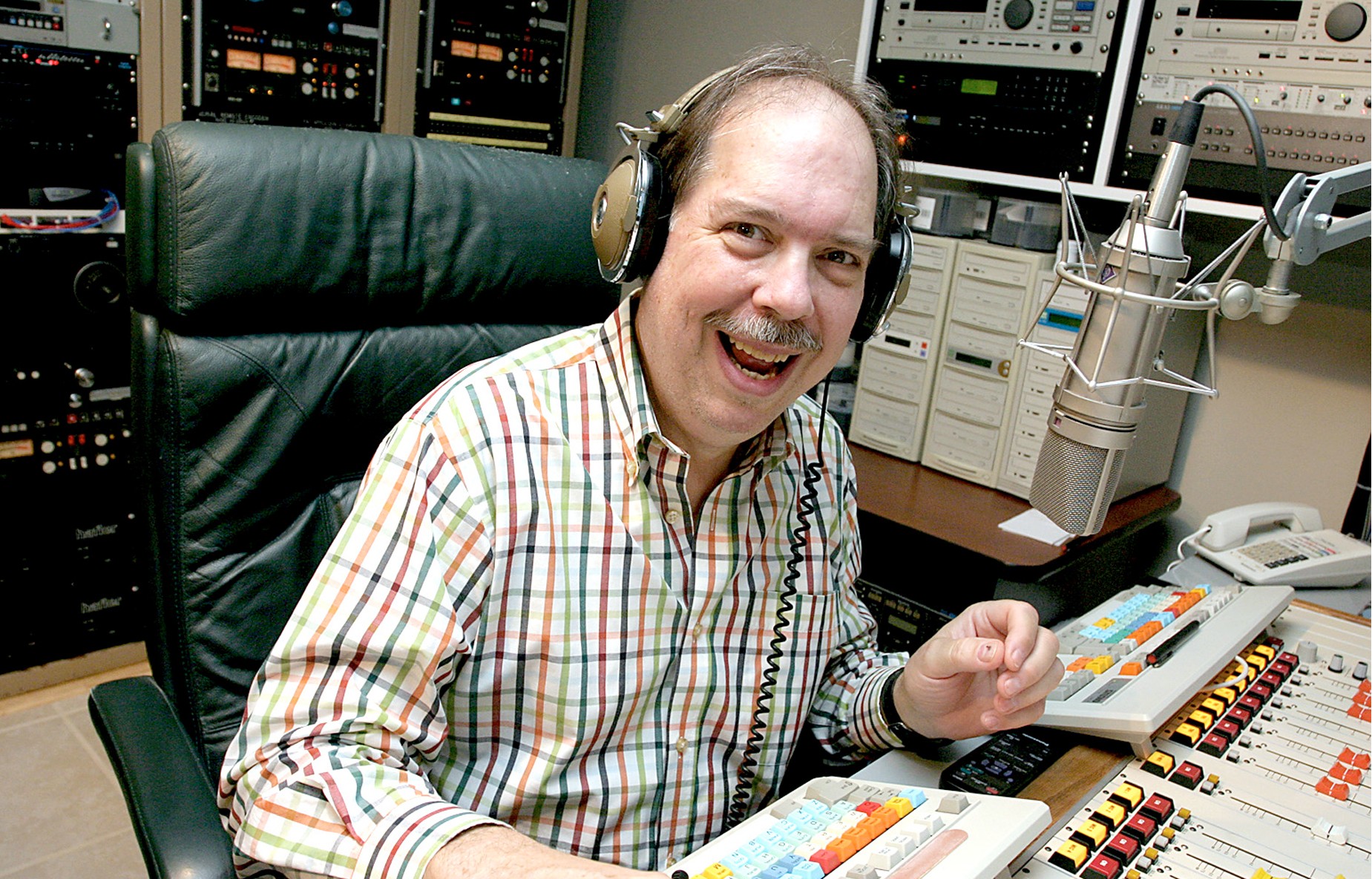
Veteran radio personality, Pat Appleson, considers himself fortunate to have had the opportunity to work with talent as diverse as Dolly Parton, Loretta Lynn, Johnny Cash, Tom T. Hall, Ray Stevens, Tammy Wynette, George Jones, Merle Haggard, Larry Gatlin, Roger Miller, Tanya Tucker, Bill Anderson, Charlie Pride, Mac Davis, and many others. Pat's show, "Pat's Country Classics," is on every Sunday from 9pm-Midnight EST. You're gonna love This Weeks 3 Hour Show...
